
Easy Girl
RinkuStarkEntertainment
4.61.69K Reviews
- Version
- 3.2.2
- Installs
- 500.00K
- Age Rating
- Mature 17+
Screenshots



Our Review of Easy Girl
 Analysis by Appyee
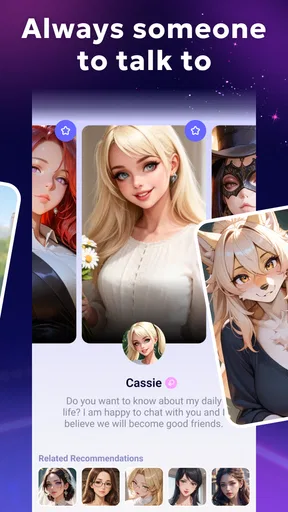
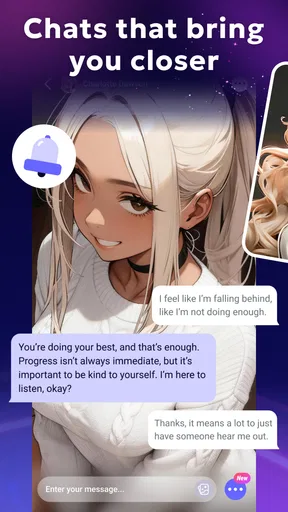
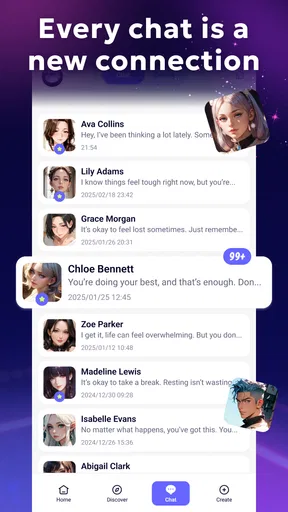
Easy Girl is an entertainment app built around an AI companion and fantasy-focused conversations. I approached it less like a traditional game and more like a private space for playful, imaginative chat. That distinction matters: if you want a structured story with fixed characters, objectives, and a clear ending, this will feel loose. If you prefer shaping the mood yourself and seeing where a conversation goes, it has a more flexible appeal.
The app is free to install, although optional purchases range from $3.49 to $59.99 per item. It is marked for mature audiences aged 17 and over, so I would not treat it as a general family entertainment app. RinkuStark is the developer, and the current version is 3.2.2. It requires Android 7.0 or later, which makes it accessible on many older Android devices as well as newer phones.
What stood out to me first was how little preparation is needed. There is no long tutorial to learn and no complicated control scheme. The experience depends mainly on what I write, how specific I am, and whether I keep a consistent tone. That makes the first few minutes easy, but it also means the quality of the session depends heavily on the user rather than on a carefully guided content system.
How the current version feels in everyday use
In practical terms, I found the app best suited to short, casual sessions. It can fill a quiet moment when I want something more interactive than scrolling through videos but less demanding than playing a full game. A typical use might be chatting during a commute, testing a fictional scenario before writing it down, or simply trying different conversation styles to see how the companion responds.
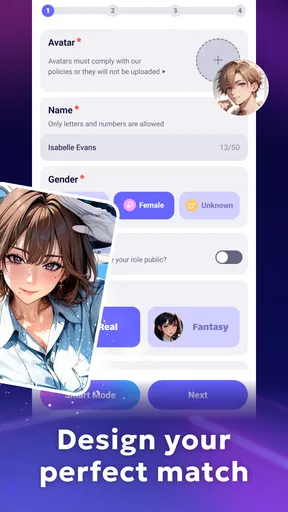
The fantasy angle gives the app more room than an ordinary chatbot. Instead of limiting the interaction to practical questions, I can frame a scene, choose a personality direction, or steer the conversation toward a fictional setting. The important word is steer. I get better results when I explain the tone and situation clearly instead of sending vague one-line prompts and expecting the app to create a complete experience on its own.
That also creates the first important trade-off. The app feels immediate because it does not force me through a large amount of setup, but the lack of a rigid structure can make some sessions feel uneven. One conversation may develop naturally, while another may need repeated nudges to stay on topic. I would not call that a flaw unique to this app, but it is especially noticeable when the main attraction is open-ended interaction.
The mature rating should be taken seriously. This is not an app I would recommend casually to a younger user, nor would I place it on a shared family tablet without considering who might open it. Adults who are comfortable with fantasy-oriented AI conversation will understand the intended audience more quickly than users looking for harmless, all-ages entertainment.
Who gets the most from it
I think Easy Girl works best for adults who enjoy improvisation and do not need every interaction to produce a polished story. It may also appeal to people who like experimenting with character prompts, conversational role-play, or unusual fictional situations. Writers could use it as a low-pressure brainstorming partner, especially when they want to test dialogue or explore how a character might react before committing the idea to a draft.
There is a useful distinction between using it as a companion and using it as a tool. As a companion, the value comes from the feeling of an ongoing exchange. As a tool, the value comes from quickly trying ideas. I found the second use more dependable because I could define a small task: create a scene, continue a premise, or offer a reaction from a chosen perspective. Expecting a consistently deep relationship experience is a much bigger request, and the app is less convincing when I demand that every exchange feel emotionally rich.
Someone who wants a conventional mobile game should probably skip it. There are no reasons here to expect levels, traditional objectives, or the satisfaction of mastering a ruleset. Likewise, users who mainly want factual answers, productivity help, or a reliable search tool would be better served by an assistant designed for those purposes. The entertainment focus is central, not a side feature.
Three habits that improve the experience
My first practical tip is to establish the scene in one compact message. I get more coherent replies when I mention the setting, the relationship between the characters, and the mood I want. A prompt such as “continue this tense conversation in a quiet café, keep the replies playful but restrained” gives the interaction a direction without turning it into a long instruction manual.
Second, I recommend correcting the tone early. If a reply becomes too dramatic, too brief, or too far from the character I imagined, I would say so immediately rather than trying to repair the conversation several messages later. This is a small workflow change, but it prevents the session from drifting. In my experience, gentle course correction is more effective than starting over every time the response misses the intended mood.
Third, I would use separate chats or fresh starts for unrelated scenarios whenever possible. Mixing a romantic fantasy, a comedy idea, and a writing exercise in one continuous thread can make the context harder to control. Keeping each purpose distinct makes it easier to judge whether the app is responding well to the current prompt rather than carrying over an old tone.
A fourth useful approach is to treat the app as a rehearsal space, not as the final author of an idea. I can ask it to offer several possible reactions, compare two character attitudes, or continue a scene from a different emotional angle. That gives me more control than asking for a complete story and accepting the first result. It also makes the app feel less repetitive because I am using it to explore options rather than waiting passively for entertainment.
What the version and release history suggest
The app was released on March 12, 2025, and version 3.2.2 represents a relatively mature stage compared with a brand-new first release. I would read that as a sign that the developer has had time to refine the basic experience, but not as proof that every rough edge has disappeared. Version numbers can show ongoing development; they cannot guarantee that the app will match every user’s preferred conversation style.
The current product also has a visible audience. It has passed 500K installs, with an average rating of 4.6 from around 13K ratings and roughly 1.7K written reviews. Those figures make it easier to see the app as an established entertainment choice rather than an experiment with no user base. Still, popularity is not the same as universal suitability. A mature AI companion can receive strong feedback from its target audience while remaining a poor fit for someone who dislikes open-ended chat.
For existing users, the move to version 3.2.2 is most relevant as a signal of continuity. People who already enjoy the app are likely to value stability and familiar access more than a dramatic redesign. I would avoid assuming that a version update automatically changes the personality or makes older conversations better. The practical test is whether the current interaction style suits the way you use it today.
New users should also remember that an established version does not remove the need to learn the app’s rhythm. The first conversation may feel ordinary if the prompt is too broad. I would spend a few minutes testing different levels of detail before judging the whole product. That short experiment reveals whether the app’s conversational flexibility is a strength for me or simply extra work.
Free access and the purchase decision
The free entry point is helpful because I can decide whether the style suits me before spending anything. That is particularly important here, since the app’s appeal is subjective. Some people will enjoy the fantasy chat immediately; others will find the interaction too dependent on prompting. I would use the free experience as a genuine trial rather than treating it as a preview that must lead to a purchase.
Optional in-app items cost between $3.49 and $59.99 each. That is a wide range, so I would be careful before confirming any purchase and check exactly what an item provides in the moment. The most sensible approach is to identify a real limitation in my own use first. If I am still unsure whether I like the conversation style, paying more will not solve that uncertainty.
The purchase model may suit frequent users who return to the app and understand what they want from it. It is less attractive to someone who only wants a quick novelty experience. I would also compare the cost with ordinary entertainment alternatives: a streaming subscription, a conventional narrative game, or a free chatbot may provide better value depending on whether I want passive viewing, structured play, or broad information rather than personal fantasy interaction.
One subtle point is that “free” does not necessarily mean frictionless. Even without paying, I still need to invest attention in shaping the conversation. The real cost for a casual user may be time spent refining prompts, restarting scenarios, or deciding whether a response is worth continuing. For me, that effort is reasonable when I have a specific creative idea, but less appealing when I only want instant amusement.
Where it still falls short
The biggest limitation is the unpredictability that comes with an open-ended AI companion. A conversation can be engaging without being consistently nuanced. Sometimes I want a response that remembers the emotional direction of the scene and builds on it; instead, the exchange may feel like it has taken a small step sideways. That can be managed with clearer prompts, but it cannot be eliminated by better wording every time.
I also would not use it as a substitute for real social support. The app can imitate a conversational partner for entertainment, but that is different from having a trusted friend, counselor, or professional adviser. If someone is dealing with serious loneliness, distress, or an urgent personal problem, an AI fantasy app is the wrong place to make it their only source of support.
Another weakness is the lack of a strong external goal. In a conventional game, even a short session usually has a challenge, reward, or progression loop. Here, I have to supply the reason to continue. That freedom is enjoyable for imaginative users, but it can also make the experience feel empty after the initial curiosity fades.
Privacy-minded users should make their own careful judgment before entering personal details into any AI conversation. I would keep identifying information, private contact details, financial information, and sensitive real-world secrets out of casual role-play. There is no benefit in turning a fantasy session into a record of information I would not normally share with an entertainment app.
How it compares with familiar alternatives
Compared with ordinary entertainment apps, Easy Girl is more interactive but less predictable. A video gives me polished content with no effort, while this app asks me to participate. A story-driven game offers stronger structure and usually clearer progression, while this app gives me more freedom to change the premise at any moment. Neither approach is automatically better; the right choice depends on whether I want to direct the experience or simply consume it.
Compared with a general-purpose AI assistant, this app is more focused on companionship and fantasy. A general assistant is usually the better option for research, planning, writing in a formal style, or answering practical questions. Easy Girl makes more sense when the goal is mood, character interaction, and playful improvisation rather than accuracy or task completion.
Compared with a social platform, the app offers a more controlled one-to-one setting. I do not have to manage a public profile, wait for another person to reply, or navigate a busy feed to start a scenario. The trade-off is that the interaction is artificial and can feel repetitive if I use the same prompts repeatedly. Users seeking genuine community and unpredictable human conversation should look elsewhere.
The app also differs from a fixed romance or visual-novel experience. Those products typically provide authored characters, planned plot turns, and a defined atmosphere. Here, I can attempt to shape the direction myself, which is appealing when I want experimentation. However, I give up some of the polished pacing and narrative certainty that a professionally written story can provide.
Questions I would consider before installing
Will it work on an older Android phone? The minimum operating system is Android 7.0, so the requirement is not especially demanding by modern standards. That does not tell me how every device will perform, but it does mean users do not need a very recent Android release simply to meet the stated system requirement.
Is it suitable for teenagers? The content rating is Mature 17+, so I would treat it as an adult-oriented app and follow that boundary. It is not something I would recommend for children, and parents should not assume that an AI companion with a playful presentation is automatically appropriate for younger users.
Do I need to pay to understand whether I like it? No. The app is free to start, which lets me test the conversation style before considering optional purchases. I would only spend money after deciding that the basic experience fits my habits and after checking the exact item being offered.
Can it replace a normal chatbot? Not really. Its strongest use is entertainment and fantasy interaction. For practical questions, detailed research, dependable planning, or professional guidance, a tool designed around those jobs is a better choice. The app becomes more compelling when I stop asking it to behave like something it was not built to be.
What should I watch as it develops? I would pay attention to whether future updates make conversations more consistent, give users clearer control over tone, and reduce the need to repeat context. I would also watch how the balance between free use and optional purchases feels over time. Those changes would affect the app’s long-term value more than a simple increase in available scenarios.
My final take after using it
Easy Girl is a focused entertainment app for adults who enjoy directing AI-powered fantasy conversations. Its free starting point, broad Android compatibility, and established user base make it easy to try, while version 3.2.2 suggests that the developer is continuing to maintain the product. I appreciate that I can enter a scenario quickly and reshape it without learning a complex game system.
My recommendation comes with a clear condition: enjoy it for what it is. I would choose it for playful role-play, creative experiments, and short companion-style sessions, not for structured gameplay, serious advice, or a replacement for human connection. The strongest results come from users who are willing to provide context, correct the tone, and treat each conversation as a collaborative experiment.
My honest verdict: it is worth trying if mature, AI-driven fantasy chat sounds appealing and you are comfortable with an experience that depends on your prompts. I would skip it if you want a polished story with guaranteed pacing or a practical assistant that prioritizes factual tasks. For the right audience, the flexibility is the main attraction; for everyone else, that same flexibility may feel like the app is asking the user to do too much of the creative work.
Verdict
Strengths of Easy Girl
- Simple interface that is easy for first-time users to navigate.
- Quick access to the app’s main features without a lengthy setup.
- Lightweight design should run smoothly on many older devices.
- Useful for casual users seeking straightforward, uncomplicated interactions.
- Clear visual layout makes important buttons easy to locate.
Limitations of Easy Girl
- Limited advanced options may disappoint experienced users.
- Some features may require permissions that privacy-conscious users may avoid.
- The app’s appeal can feel narrow if your interests do not match its content.
- Performance may vary depending on device hardware and Android or iOS version.
- Updates and support may not be as frequent as users expect.
Similar Picks in This Category
View All
Google Play Games
Google LLC3.9

Netflix
Netflix, Inc.4.8

YouTube Kids
Google LLC4.2

Disney+
Disney4.4

Prime Video
Amazon Mobile LLC4.7

Steam
Valve Corporation3.2
Frequently Asked Questions
What is Easy Girl, and what can users do with it?
Easy Girl is generally presented as an entertainment or social-style mobile app, but its exact content and functions may vary depending on the version, developer, and region. Before downloading, review the official store description carefully to understand whether it includes games, profiles, messaging, media, or interactive features. Checking screenshots, ratings, permissions, and recent user reviews is also recommended so you know what to expect.
Is Easy Girl free to download and use?
The application may be available as a free download, although some features can require in-app purchases, subscriptions, advertising, or virtual items. Users should not assume that every function is free simply because installation costs nothing. Check the Google Play Store or Apple App Store listing for pricing details, trial conditions, recurring billing information, and refund policies before creating an account or entering payment details.
Is Easy Girl safe for children and teenagers?
Parents should check Easy Girl’s official age rating and privacy information before allowing a child or teenager to install it. If the app includes user profiles, chat, dating-style interactions, mature themes, advertising, or external links, it may not be appropriate for younger users. Review available parental controls, avoid sharing personal information, and supervise use whenever the app involves communication with strangers.
What permissions and personal information does Easy Girl require?
The permissions requested by Easy Girl can depend on the device, operating system, and features being used. An app may request access to notifications, storage, the camera, microphone, location, or account information. Before installation, read the store’s Data Safety or App Privacy section and the developer’s privacy policy. Deny permissions that are not necessary, and avoid providing sensitive details unless they are genuinely required.
What should I do if Easy Girl does not work properly or I want to delete my data?
If Easy Girl crashes, loads slowly, or fails to provide a feature, first update the app, restart your device, check your internet connection, and confirm that your operating system is supported. If the problem continues, contact the developer through the official store listing. To stop using the service, cancel any subscription separately, then use the in-app account deletion option or request data removal directly from the developer.
